
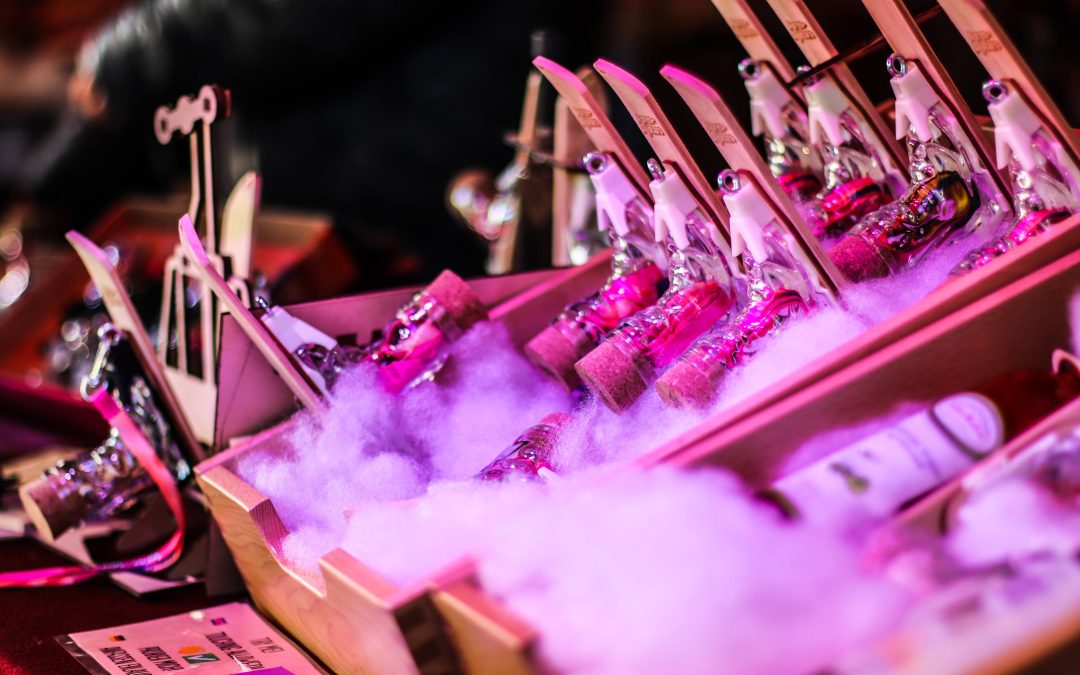
Before a ski boot glass hangs at the Apres Allstars hut at Mirabellplatz (Mirabell Square), it has passed through the hands of people in a workshop for people with disabilities. Apres Allstars works with two such workshops: one is in Piding, right on the border with Salzburg, the other in Rosenheim. Here we tell you who the Pidinger Werkstätten (workshops of Lebenshilfe Berchtesgadener Land) and the Caritas Wendelstein Werkstätten (Caritas workshops in Rosenheim) are, and where the glass and the binding come from.
What are the Pidinger Werkstätten? Pidinger Werkstätten GmbH, run by Lebenshilfe Berchtesgadener Land, is a recognised workshop for people with disabilities in Piding in the Berchtesgadener Land district. According to its own website, 268 people with disabilities from across the district work there (as of 31 December 2023). Together with the Caritas Wendelstein Werkstätten in Rosenheim, they make the Apres Allstars ski boot shot glasses by hand.
You’ll find all the huts at Mirabellplatz further down.
Who assembles the ski boot shot glasses
The Apres Allstars sets are made in two workshops for people with disabilities. “Our sets are lovingly handmade by the Caritas Wendelstein and the Pidinger Lebenshilfe workshops,” write Tobi Deckert and Michi Gasteiger on their website. A note on our own behalf: Tobi Deckert also writes for this blog. According to Apres Allstars, the Caritas Wendelstein Werkstätten in Rosenheim also help with assembly and shipping.
It was different at the start: Tobi and Michi first packed and shipped the glasses and bindings themselves, from home. As things grew, they decided to work with workshops. Their reasoning on their About us page: in their view the Caritas workshops do great work, and even a fun product can support a social cause. How the glass came about in the first place is in our article on the ski boot shot glass.
Apres Allstars doesn’t say how the work is divided between Piding and Rosenheim, or how many sets are made where. So we only write what the workshops and Apres Allstars publish themselves.
What is a workshop for people with disabilities?
A workshop for people with disabilities is a business that offers people with disabilities work, vocational training and support. Under German social law, in Book IX of the Social Code (SGB IX), it’s called a “Werkstatt für behinderte Menschen”, WfbM for short.
Lebenshilfe Berchtesgadener Land describes these workshops like this: they provide vocational rehabilitation and at the same time operate as businesses, in order to give people with disabilities access to working life. In practice, the workshops take on orders from companies, such as assembly, packing or shipping, and the employees get professional support while they work. That’s how a product like the ski boot glass set comes to be made by people with disabilities. Both workshops that work for Apres Allstars have a two-year vocational training section, where new employees learn and practise the basics of working life.
The Pidinger Werkstätten of Lebenshilfe Berchtesgadener Land
The Pidinger Werkstätten are in Piding, on the street called Hirschloh, just across the border from Salzburg. They’re run by Lebenshilfe Berchtesgadener Land, a charity that, according to its own website, has supported people with intellectual disabilities and their families since 1970. According to their website, this is what defines the Pidinger Werkstätten:
- Recognised workshop: the Pidinger Werkstätten are a recognised workshop under Book IX of the German Social Code. They enable people with intellectual, physical and mental disabilities to take part in working life.
- Admission: people with disabilities are accepted regardless of the type and severity of their disability, as long as they can do a minimum amount of useful work. They get a permanent job and are covered by health and pension insurance.
- Many areas: the employees work in the joinery, in metalworking, in services and packing, in the laundry and in the kitchen, as well as in a group with a gentler pace and a support group. Some have their workplace directly in companies in the region.
- Quality: the workshops work with quality management to DIN EN ISO 9001.
On their website, the workshops simply call their employees with disabilities “Mitarbeiter*innen”, the ordinary German word for employees. You’ll find more on the Pidinger Werkstätten website and at Lebenshilfe Berchtesgadener Land.
The Caritas Wendelstein Werkstätten in Rosenheim
The Wendelstein Werkstätten belong to the Caritas association of the Archdiocese of Munich and Freising. According to their website, they give career prospects to people whose participation in working life is made harder by disability, accident or illness. This is what their website says:
- Size: the workshops offer vocational training places and jobs for more than 550 people in the town and district of Rosenheim. On top of that, 60 people with profound and multiple disabilities attend the day support centre.
- Locations: besides the site Am Oberfeld in Rosenheim, there are sites in Raubling, on Hochgernstraße and in the Aicherpark.
- The path into the workshop: it starts with a three-month entry phase, followed by the two-year vocational training section and then the work section with a permanent job. According to Caritas, the goal remains placement in the open labour market.
- Assembly, warehouse and shipping: the areas include assembly, packing and finishing, as well as warehousing and shipping. According to Apres Allstars, the Rosenheim workshop also helps with assembling and shipping the ski boot glasses.
The Wendelstein Werkstätten also make their own products, such as home accessories under the brand “side by side”, delicatessen from the Genusswerkstatt and toys from the joinery. There’s more on the Caritas Wendelstein Werkstätten website.
Where the glass and the binding come from
The glass comes from Austria, the binding from Germany, and the two are put together in the workshops. According to Apres Allstars, this is the route:
- The glass mould: a partner in Austria makes Apres Allstars’ own glass mould. The glasses are made of real glass.
- The binding: the bindings are made of break-resistant POM, a tough engineering plastic, and are produced in Germany.
- The handwork: in the Pidinger Werkstätten and the Caritas Wendelstein Werkstätten, the finished sets are assembled from these parts by hand.
How glass and binding work together, and how the binding got to its 17th version, is in our article on the ski boot shot glass.
The finished glasses at Mirabellplatz
At the Apres Allstars stall at our Christmas market at Mirabellplatz you’ll see the finished sets: the ski boot glass in its binding, on mini skis or on the Shotski (a ski with several shot glasses mounted on it). According to Tobi, you can also have a go on the Shotski at the stall; more on that, including the drinking age, is in our article What is a shotski?.
Other huts with us have handmade things too: at La Poterie de Taizé you’ll find handmade ceramics from the pottery of the Taizé Community in Burgundy. If you’re looking for a small gift, you’ll find more ideas in Salzburg souvenirs from the Christmas market and in Gifts for skiers.
Our exhibitors
At Apres Allstars and the other huts at Mirabellplatz, you get to know the people behind the things they sell. You’ll find all our exhibitors in our exhibitor overview.
There’s more about the hut on the Apres Allstars page in our exhibitor overview. What Tobi and Michi themselves write about their partners is on their About us page.
Frequently asked questions
According to Apres Allstars, the sets are made by hand in the Pidinger Werkstätten of Lebenshilfe Berchtesgadener Land and in the Caritas Wendelstein Werkstätten in Rosenheim. The Rosenheim workshop also helps with assembly and shipping.
A recognised workshop for people with disabilities in Piding in the Berchtesgadener Land district, run by Lebenshilfe Berchtesgadener Land. According to its own website, 268 people with disabilities work there (as of 31 December 2023), in areas including the joinery, metalworking, services and packing.
In Piding in the Berchtesgadener Land district, on the street called Hirschloh. Piding is right on the border with Salzburg.
The Caritas association of the Archdiocese of Munich and Freising. The workshops have places for more than 550 people in the town and district of Rosenheim, plus a day support centre for 60 people.
The glass mould is made by a partner in Austria, and the glasses are made of real glass. The bindings are made of break-resistant POM plastic and are produced in Germany.
At the Apres Allstars stall at our Christmas market at Mirabellplatz, open from 19 November to 31 December 2026. You can also have a go on the Shotski there.
Sources
Retrieved on 30 October 2026: Apres Allstars, About us (workshops, glass mould, binding) · Pidinger Werkstätten GmbH der Lebenshilfe BGL (home page, “Wer wir sind”: profile, mission statement, training and work opportunities) · Lebenshilfe Berchtesgadener Land (home page, Pidinger Werkstätte page) · Caritas Wendelstein Werkstätten (the organisation, locations, work, training & support, assembly work, warehouse and shipping, legal notice) · our Apres Allstars exhibitor page · information from Tobi Deckert (Apres Allstars), 30 October 2026